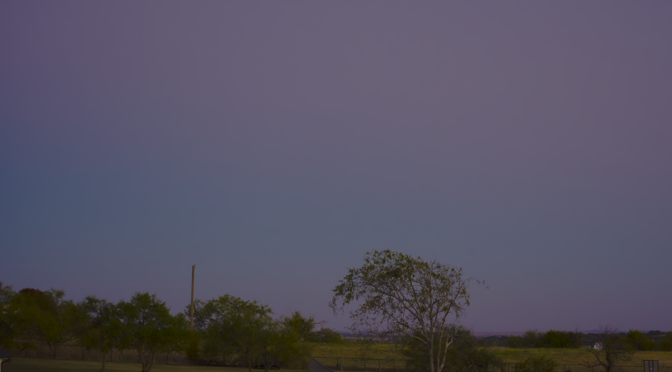
The Belt of Venus is a beautiful and subtle atmospheric phenomenon that can often be seen shortly after sunset or just before sunrise. It appears as a soft, pinkish or rosy band of color that stretches across the sky, just above the darker blue-gray shadow of the Earth that rises opposite the Sun. What you’re actually seeing is sunlight scattering through the atmosphere. The red and pink hues come from sunlight passing through more of Earth’s atmosphere when the Sun is low, while the darker area below is literally the Earth’s own shadow being projected onto the sky.

The name “Belt of Venus” doesn’t mean it has anything to do with the planet Venus. The term dates back to classical times and was inspired by the idea of Venus, the Roman goddess of love and beauty, wearing a “belt” or “girdle” of radiant color. It’s a poetic name that fits the soft pastel glow often seen around twilight, lending a romantic quality to what is really a simple scattering effect of light.

One interesting fact about the Belt of Venus is that it’s visible all over the world if you look in the right direction. While sunsets tend to draw our eyes westward, the Belt of Venus appears in the opposite direction, in the east after sunset or the west before sunrise. It’s also one of the few atmospheric phenomena that you can predict with near certainty. It happens almost every clear day, though clouds or haze can hide it. Airplane passengers sometimes get an especially vivid view of it from above the horizon, where the colors can look much deeper.

To observe it, find a clear view of the horizon opposite the Sun. Just after sunset, look toward the east about 10 to 20 minutes after the Sun has dipped below the horizon. You’ll first see a grayish-blue band rising, which is Earth’s shadow, and above it, the pinkish glow of the Belt of Venus. The colors are most vibrant when the air is clean and dry, and the effect can be especially striking when silhouetted by mountains, trees, or distant clouds. It’s one of those quiet, everyday wonders of the sky that’s easy to overlook but deeply rewarding once you know where and how to look.
Clear Skies,
Scott