Belt of Venus

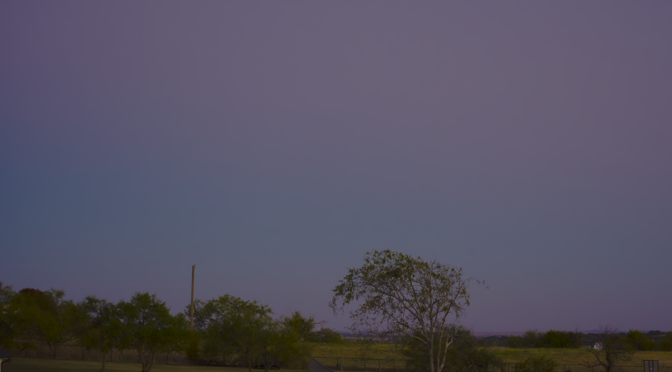
The Belt of Venus is a beautiful and subtle atmospheric phenomenon that can often be seen shortly after sunset or just before sunrise. It appears as a soft, pinkish or rosy band of color that stretches across the sky, just above the darker blue-gray shadow of the Earth that rises opposite the Sun. What you’re actually seeing is sunlight scattering through the atmosphere. The red and pink hues come from sunlight passing through more of Earth’s atmosphere when the Sun is low, while the darker area below is literally the Earth’s own shadow being projected onto the sky.

Belt of Venus and the Full Beaver Moon
Belt of Venus and the Full Beaver Moon on Nov. 4, 2025.

The name “Belt of Venus” doesn’t mean it has anything to do with the planet Venus. The term dates back to classical times and was inspired by the idea of Venus, the Roman goddess of love and beauty, wearing a “belt” or “girdle” of radiant color. It’s a poetic name that fits the soft pastel glow often seen around twilight, lending a romantic quality to what is really a simple scattering effect of light.

Belt of Venus and Full Moon

One interesting fact about the Belt of Venus is that it’s visible all over the world if you look in the right direction. While sunsets tend to draw our eyes westward, the Belt of Venus appears in the opposite direction, in the east after sunset or the west before sunrise. It’s also one of the few atmospheric phenomena that you can predict with near certainty. It happens almost every clear day, though clouds or haze can hide it. Airplane passengers sometimes get an especially vivid view of it from above the horizon, where the colors can look much deeper.

Belt of Venus
The Belt of Venus.

To observe it, find a clear view of the horizon opposite the Sun. Just after sunset, look toward the east about 10 to 20 minutes after the Sun has dipped below the horizon. You’ll first see a grayish-blue band rising, which is Earth’s shadow, and above it, the pinkish glow of the Belt of Venus. The colors are most vibrant when the air is clean and dry, and the effect can be especially striking when silhouetted by mountains, trees, or distant clouds. It’s one of those quiet, everyday wonders of the sky that’s easy to overlook but deeply rewarding once you know where and how to look.

Clear Skies,

Scott

ZWO SeeStar S30 Smart Telescope

ZWO SeeStar S30
The ZWO SeeStar S30 all-in-one smart telescope.

The ZWO SeeStar S30 is a compact all-in-one smart telescope that makes capturing the night sky simple while still delivering impressive results. Keep in mind that ZWO introduced the SeeStar “S30 Pro” in 2025 and started shipping that unit in early 2026 but this review pertains to the original S30.

The entire unit stands about a foot tall with the included mini tripod and weighs a touch over 3.5 lbs. It comes with its own soft sided carrying case, and it’s super portable. It can easily fit into a carry on bag or backpack. It uses a 30mm (1.2″) apochromatic triplet lens with ED glass and a 150mm focal length at f/5, producing sharp images with good color correction for its size. The S30 is built around a Sony IMX662 sensor and features fully automated pointing, tracking, and live stacking, allowing me to focus on framing and enjoying the sky rather than setup and alignment. Everything is controlled through the Seestar mobile app, which makes finding and imaging deep sky objects fast and intuitive.

ZWO SeeStar S30 in EQ Mode with Power Bank Attached
ZWO SeeStar S30 in EQ Mode with power bank attached.
ZWO SeeStar S30
ZWO SeeStar S30 on the Skywatcher Star Adventurer mount.

Despite its small footprint, the SeeStar S30 is a very capable imaging platform. It includes built in filters for dark frames, UV IR cut, and light pollution reduction/narrow bandpass filter, along with a magnetic solar filter for safe solar imaging. Images are saved to the internal 64 GB storage, and the internal 6000 mAh battery typically provides 3.5 – 6 hours of use on a single charge depending on whether you need to turn on the dew heater or not.  I purchased an Anker Power Bank(PowerCore 10K), Compact Travel-Ready 10,000mAh battery pack for $26 off Amazon and this easily keeps the S30 powered up for a full night of observing. With Wi Fi connectivity, onboard processing, and the aforementioned lightweight portable design, the SeeStar S30 has become a powerful and convenient tool for me to  capture nebulae, galaxies, open clusters the Moon, the Sun and more. Due to it’s small aperture the S30 is not the best option for resolving fine details on the Sun, Moon and planets but for mid-sized to large deep sky objects it excels.

SeeStar S30 in EQ Mode
SeeStar S30 in EQ Mode.

The ZWO SeeStar S30 is a great choice for anyone who’s new to astronomy because it removes so many of the traditional barriers that can make the hobby feel overwhelming at first. Instead of dealing with separate mounts, cameras, cables, and alignment routines, everything you need is built into one compact, well thought out package. Setup is quick and straightforward, and the app walks you through the process of finding and tracking objects automatically. You spend far less time troubleshooting equipment and far more time actually enjoying the night sky, which is exactly what beginners need to stay excited and engaged.

What really makes the S30 stand out is how approachable it makes astrophotography. With features like automatic tracking, live stacking, and smart processing handled in the background, you can capture impressive images of the Moon & Sun, nebulae, star clusters and galaxies without needing deep technical knowledge. It’s lightweight, portable, and intuitive, yet still capable enough to produce results that feel genuinely rewarding. For someone just getting started, the SeeStar S30 offers an easy, confidence building way to explore the universe and learn as you go, all without feeling like you need a degree in astrophysics to get there.

Go here to see images I’ve taken with the ZWO SeeStar S30.

Clear skies,

Scott

What Are Comets?

Comet Hale-Bopp
Comet Hale-Bopp seen before sunrise at the Fort Worth Astronomical Society’s dark sky location near Paradise, TX on March 20, 1997.

Comets are small icy bodies that orbit the Sun and are often described as leftover building blocks from the formation of the solar system about 4.6 billion years ago. Most of the time they remain frozen and inactive in the distant outer regions of the solar system, but when a comet’s orbit brings it closer to the Sun, heat causes its ices to vaporize. This process releases gas and dust, creating the glowing appearance that makes comets visible from Earth.

Comets form in two main reservoirs far beyond the planets. Short period comets originate in the Kuiper Belt, a disk shaped region beyond Neptune that also contains dwarf planets such as Pluto. Long period comets come from the Oort Cloud, a vast, spherical shell of icy objects that surrounds the solar system at distances thousands of times farther than Earth is from the Sun. These comets likely formed closer to the giant planets early in the solar system’s history and were later scattered outward by gravitational interactions.

Continue reading What Are Comets?

Celestron StarSense Explorer DX 130AZ

Overview

The Celestron StarSense Explorer DX 130AZ Newtonian telescope and tripod.

I’ve had the Celestron StarSense Explorer DX 130AZ for about a year now, so I thought I’d share my thoughts on this telescope, my experiences using it both at home and at public star parties, and a few drawbacks that potential buyers should know about so there are no surprises.

Let me start with my 30,000-foot take. It’s a good little scope that’s beginner-friendly, portable, and easy and fun to use. While it does have some flaws, which I’ll get into shortly, I think it works very well as an entry-level telescope for those new to the hobby and looking to explore the night sky.

Design and Features

Looking down the DX 130AZ’s optical tube.

The Explorer DX 130AZ is a 5-inch Newtonian reflector mounted on an alt-azimuth mount and enhanced by a smartphone-guided system. It uses Celestron’s proprietary StarSense Explorer app on your smart phone, which allows you to easily locate objects in the night sky. That feature alone is what makes this telescope especially appealing and accessible to both newcomers and seasoned amateurs.

Continue reading Celestron StarSense Explorer DX 130AZ

Types of Twilight

Venus and Jupiter Conjunction 8/11/25

Twilight is the period before sunrise and after sunset when the Sun is below the horizon but its light is still scattered through Earth’s atmosphere. This scattering bends sunlight around the planet, illuminating the sky even when the Sun itself is no longer visible. Twilight is divided into three main types, civil, nautical, and astronomical, based on how far below the horizon the Sun is, and each represents a distinct stage in the transition from day to night.

Civil twilight occurs when the Sun is between 0° and 6° below the horizon. During this phase, there is still enough natural light for most outdoor activities without artificial lighting. The sky often displays vivid reds, oranges, and pinks near the horizon, including the Belt of Venus, a soft pink band visible opposite the Sun caused by Earth’s shadow rising into the atmosphere, while the brightest stars and planets begin to appear. Civil twilight is commonly associated with the everyday concepts of dawn and dusk and is widely used in photography, aviation, and urban lighting schedules.

Continue reading Types of Twilight

The Pantheon

The Pantheon in Rome is one of the most extraordinary architectural achievements of the ancient world. Built around 118–125 AD during the reign of Emperor Hadrian, the current structure replaced an earlier temple commissioned by Marcus Agrippa during the reign of Augustus. Nearly two thousand years later, the Pantheon remains one of the best preserved monuments of Roman engineering and design. But beyond its beauty and endurance, the Pantheon also reveals a deep connection to the heavens, making it an intriguing site for the study of archaeoastronomy.

The Pantheon
The Pantheon in Rome.

The Pantheon’s most remarkable feature is its dome.  To this day it’s still the largest unreinforced concrete dome in the world. Measuring 43.3 meters (142 feet) in diameter, the dome is a perfect hemisphere, mirroring the shape of the celestial sphere. Its design was a marvel of Roman engineering: the builders used progressively lighter materials as they reached the top, mixing volcanic pumice into the concrete to reduce weight. The interior is divided into recessed rectangular panels, or coffers, which lighten the structure while also creating a mesmerizing geometric pattern that seems to draw the eye upward toward the heavens.

Continue reading The Pantheon

Clava Cairns

Clava Cairns is one of Scotland’s most evocative prehistoric sites, lying just a few miles east of Inverness in the heart of the Highlands. I visited this amazing site in May of 2025 and at first glance it may appear to be little more than a scattering of stone circles and cairns, softened by moss and time, yet these ancient structures hold a story stretching back nearly 4,000 years. Built during the Bronze Age, the cairns served as sacred burial places, but they were far more than simple tombs. Their design reflects a sophisticated understanding of astronomy, the cycles of the seasons, and the deep spiritual connection between life, death, and the cosmos.

Clava Cairns South-West Cairn

The site is made up of several passage graves, ring cairns, and an array of standing stones arranged with deliberate care. Archaeologists believe that the builders of Clava Cairns were not only skilled in working with stone, but also in reading the skies. The most striking evidence of this lies in the alignment of the passageways. On the shortest day of the year, the winter solstice, the setting sun shines directly into the inner chambers of certain cairns, illuminating the very heart of the tomb. This was no coincidence. To the people who raised these stones, the solstice marked both the depth of winter’s darkness and the promise of light’s return, a cycle of death and rebirth mirrored in their burial rites.

Continue reading Clava Cairns

Chimney Rock & Archaeoastronomy

In July 2023 my son and I spent a week in Durango, CO doing all the fun summer stuff we could including rafting down the Animas river, riding the Durango & Silverton narrow gauge train, a tour of Mesa Verde National Park and a visit to Chimney Rock National Monument. Chimney Rock is only about an hour drive from Durango.

Chimney Rock National Monument

Visiting Chimney Rock National Monument in southwestern Colorado was like stepping into a portal that connected earth, sky, and the ancient humans that once occupied that land. As we hiked the ridge trail that winds up to the base of the two towering rock pinnacles—Chimney Rock and Companion Rock—I couldn’t help but marvel at the beauty and significance of this unique spot.

The landscape stretched wide in every direction, with the San Juan Mountains rising in the distance and the valley below. I could easily make out Peterson’s ridge or mesa across the way from the great house where I was told there were even more kivas and ruins. But what moved me most was not just the natural beauty—it was the knowledge that this was once a place of profound astronomical observation and ceremonial importance for the ancestral Puebloans over a thousand years ago.

Standing on that high ground, I learned how the people who lived here built structures and aligned them with cardinal points and astronomical events. Most striking was the alignment with the major lunar standstill, a rare event that occurs roughly every 18.6 years. From a specific vantage point at the Great House Pueblo, the moon rises precisely between Chimney Rock and Companion Rock during this event—a phenomenon that must have been deeply significant to them. It’s amazing to think that they observed and tracked the cycles of the moon with such precision, incorporating that knowledge into their architecture, ceremonies, and culture.


Chimney Rock National Monument - The Great House
Chimney Rock National Monument – The Great House

The deeper I explored the site and its history, the more I appreciated how attuned these people were to the rhythms of the cosmos. This wasn’t just a village or a ceremonial site—it was an observatory built into the land itself. To witness the same skies, the same rock formations, and to walk among their ruins was both humbling and inspiring. Chimney Rock reminded me that long before telescopes and digital star charts, humans were already charting the heavens and weaving that knowledge into the heart of their culture.

Continue reading Chimney Rock & Archaeoastronomy

Comet (Tsuchinshan-ATLAS)

The Bright Comet of 2024

Comet A3
Comet C2023 A3 (Tsuchinshan-ATLAS) on Oct. 13, 2024

The anticipated brightening of Comet C/2023 A3 (Tsuchinshan-ATLAS) for northern hemisphere observers began in late September 2024. True to predictions the comet brightened as it entered the inner solar system and approached perihelion. The comet was poised for a great showing in the evening sky after sunset for a week to ten days beginning on October 12, 2024.

Comet A3
Comet C2023 A3 (Tsuchinshan-ATLAS) Oct. 12, 2024

Comet C/2023 A3 (Tsuchinshan-ATLAS) moved into the constellation Serpens Caput by Tuesday, Oct. 15, 2024. It was only a little over 1 degree (The width of the tip of your little finger at arm’s length) away from the globular cluster M5 on this evening. The following is a screen capture of the comet and M5 as predicted in Stellarium.

Continue reading Comet (Tsuchinshan-ATLAS)

Total Solar Eclipse Considerations

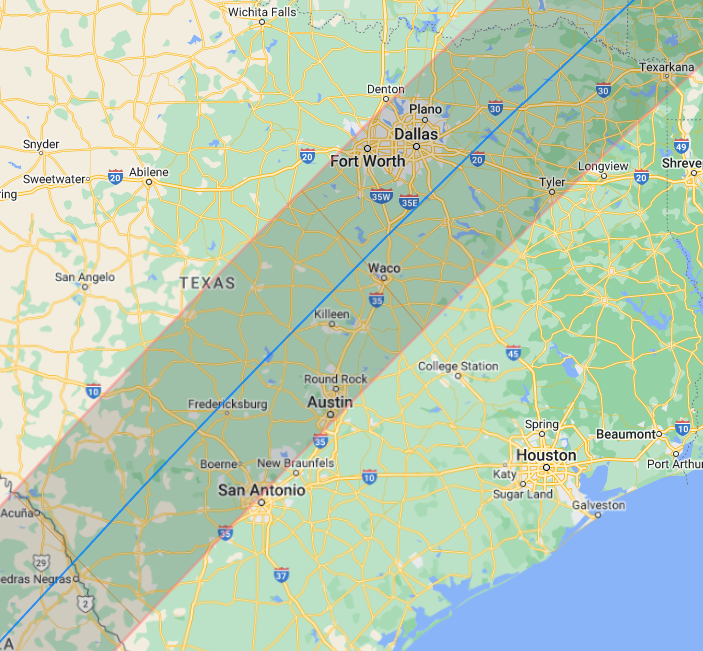
If you are going to be observing the April 8, 2024 total solar eclipse (TSE) from Texas please review the image below. On eclipse day you will need to be somewhere in that shaded area, and preferably closer to the blue or “centerline” during the eclipse. It doesn’t matter whether you are in extreme south Texas or all the way up on the Red River in northeast Texas, as long as you are between the lines and again, close to the blue centerline you’ll enjoy up to 4 minutes and 20 + seconds of totality (weather permitting). That means the Moon completely covering the Sun and providing amazing views of the sun’s corona and other astonishing solar eclipse phenomena.
Path of Totality for Texas on April 8, 2024.
If you have never witnessed a TSE here is your big chance but remember to experience the totally eclipsed Sun you must be in between the shaded lines on the map above or somewhere along this path whether it be down in Mexico or farther up into the eastern U.S. or Canada. There is no almost about this! Totality only occurs between the marked lines seen on the map. But be warned, the closer you are to one of the red lines (border of totality) but still within the “path of totality” the SHORTER your totality time. This is why it’s important to try and get as close as you can to the centerline for maximum totality. The reason for the reduction in totality duration as you move away from the centerline is directly related to the fact that the Moon is round. The moon is round and so is its shadow as it falls on the Earth.
TSE 8-21-2017 - Outer Corona.
TSE 8-21-2017 – Outer Corona.

So make your arrangements to get yourself in the path of totality on eclipse day otherwise you are just going to see a partial solar eclipse. The difference between seeing a partial solar eclipse and a total solar eclipse is like hitting the traveling carnival in your local shopping center parking lot or going to Disney World in Florida. Maybe I’m dating myself a little? Do they still even have traveling carnivals? Anyway, there is no comparison. You do not get to see totality with a partial solar eclipse, and that is where the magic happens.

Continue reading Total Solar Eclipse Considerations

Current amateur astronomy information such as points of interest and events in the night sky, star party dates, educational information, telescopes buying tips and much more.